Introduction
What makes Excavators truly flexible on modern job sites is not the machine alone but the attachments it uses, and in this guide you will learn how excavator attachments expand capabilities, improve efficiency, control costs, and help Excavators adapt to real working conditions.
Understanding Excavator Attachments and Their Role in Excavators
What Are Excavator Attachments
Excavator attachments are tools installed on Excavators to extend what the machine can do on a job site. Instead of relying on one fixed function, attachments let Excavators dig, break, lift, sort, or compact materials using the same base machine.
This flexibility matters because projects rarely involve a single task from start to finish, and operators need equipment that adapts quickly as conditions change. Attachments act like interchangeable work tools, turning one excavator into a multi-purpose solution that fits different phases of construction, demolition, or earthmoving work.

Why Attachments Are Essential for Productivity and Cost Control
Attachments play a direct role in improving productivity while keeping costs under control. When Excavators can switch tools instead of machines, work continues without long interruptions. Operators complete tasks faster because each attachment is purpose-built for a specific operation, whether it is digging hard soil or handling loose materials. Over time, this efficiency translates into measurable savings across labor, fuel, and equipment ownership.
Key cost and efficiency benefits include:
● Fewer machines required on site, which simplifies planning and supervision.
● Lower fuel consumption because one excavator replaces several specialized units.
● Reduced labor hours since attachments complete tasks more precisely and faster.
Cost Factor | Without Attachments | With Excavator Attachments |
Machine count | Multiple machines | One excavator |
Fuel usage | Higher overall | Lower combined |
Downtime | Frequent changeovers | Minimal switching time |
Main Types of Excavator Attachments and Their Uses
Excavator Buckets as the Foundation of Excavator Work
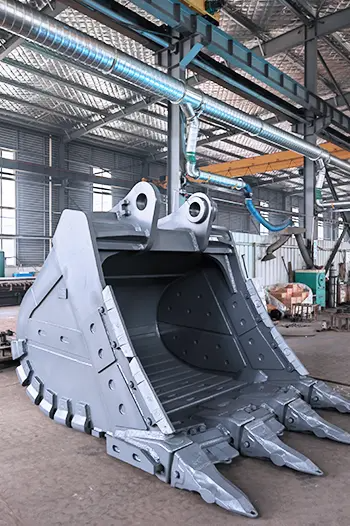
Buckets are the most common and widely used excavator attachments, forming the foundation of most Excavators’ daily work. Different bucket designs match different materials and digging conditions, which directly affects efficiency and wear life.
A well-chosen bucket improves penetration, reduces resistance, and minimizes unnecessary stress on the excavator.Common bucket categories and their roles are shown below:
Bucket Type | Typical Application | Key Advantage |
General-purpose | Soil, sand, light gravel | Balanced performance |
Heavy-duty | Mixed and compacted ground | Increased durability |
Rock bucket | Hard rock, abrasive materials | Reinforced wear areas |
Skeleton / screening | Sorting and separation | Reduced material handling steps |
Choosing the right bucket based on material type helps Excavators work faster and extends attachment service life.
Rippers, Breakers, and Hard-Ground Solutions
Hard ground often requires more than standard digging tools, and this is where rippers and breakers become essential. Rippers focus force into a single point, making initial ground entry easier in compacted soil or weathered rock. Hydraulic breakers apply repeated impact energy, allowing Excavators to break concrete, asphalt, or solid rock without blasting or manual labor.
These attachments stand out because they:
● Reduce strain on the excavator during tough ground conditions.
● Improve control compared to manual breaking methods.
● Shorten project timelines in demolition and excavation stages.
Their reinforced structures are designed to handle constant impact, making them reliable choices for demanding environments.
Grabs, Grapples, and Material Handling Attachments
Material handling attachments help Excavators move, sort, and load materials that are difficult to manage with buckets alone. Grabs and grapples are especially useful when dealing with irregular, loose, or bulky materials such as scrap, debris, or stone. They improve grip and control, which increases safety while reducing material loss during handling.
In practical use, these attachments allow operators to:
● Lift and place materials more accurately.
● Reduce manual handling and associated risks.
● Maintain steady workflow during sorting or loading tasks.
For projects involving cleanup, recycling, or bulk handling, they add precision that standard tools cannot provide.
Quick Couplers and Hitches for Flexible Excavator Operation
Quick couplers and hitches focus on one critical goal: reducing downtime between tasks. They allow operators to change attachments in minutes rather than hours, keeping Excavators productive throughout the workday.
This flexibility is especially valuable on sites where tasks change frequently, such as urban construction or mixed-use projects.Benefits that customers notice quickly include:
● Faster attachment changes without complex tools.
● Improved operator safety during switching operations.
● Greater utilization of each excavator on site.
By combining quick couplers with a well-planned set of attachments, Excavators become adaptable machines that respond efficiently to real job-site demands.
How to Choose the Right Excavator Attachments for Your Excavator
Matching Attachments to Excavator Specifications
Choosing attachments starts by understanding how Excavators are built and how they deliver power. Tonnage, hydraulic flow, and mounting systems decide whether an attachment works smoothly or causes constant problems.
If an attachment feels too heavy or slow, it usually means the excavator cannot support it properly. They must work together as one system, not as separate parts.

Oversized or undersized attachments bring clear risks:
● Oversized tools reduce stability and increase wear on pins and hydraulics.
● Undersized tools waste excavator power and slow down productivity.
● Incorrect mounting leads to vibration, poor control, and safety concerns.
Excavator Factor | Why It Matters | Impact on Performance |
Operating weight | Supports attachment mass | Stability and safety |
Hydraulic flow | Powers attachment movement | Speed and efficiency |
Mounting type | Ensures secure connection | Control and lifespan |
When specifications align, Excavators respond better and operators feel confident during daily work.
Assessing Project Requirements and Site Conditions
Every job site demands something different, and attachments should match those conditions closely. Soil type, material hardness, and space limitations change how Excavators perform. Soft soil calls for efficiency and reach, while rock or concrete demands strength and impact resistance. We also need to think about how long the attachment will stay in use.
Project planning usually follows two paths:
● Short-term jobs focus on speed and quick installation.
● Long-term operations prioritize durability and lower maintenance.
If a site has tight access or strict environmental rules, attachment choice becomes even more important. Matching the tool to the environment keeps Excavators productive without unnecessary strain.
Customization and Application-Specific Design
Standard attachments work well for many tasks, yet some projects push beyond normal conditions. Extreme wear, unusual materials, or unique workflows often require customized solutions. This is where experienced manufacturers add real value, designing attachments around how Excavators are actually used on site.
Cost Considerations and Return on Investment
Cost should never be viewed only as the purchase price. Attachments influence fuel use, maintenance frequency, and downtime over time. A lower upfront price often hides higher long-term costs, especially when replacements come early.
Smart buyers usually look at:
● Service life compared to operating intensity.
● Maintenance needs over months or years.
● Productivity gains versus attachment cost.
High-quality attachments support Excavators consistently, which protects budgets and schedules across multiple projects.
Maintenance, Safety, and Long-Term Value of Excavator Attachments
Routine Maintenance Practices for Excavator Attachments
Maintenance keeps attachments reliable and Excavators running smoothly. Daily checks catch small problems before they grow into expensive downtime. Cleaning removes abrasive materials that accelerate wear, while lubrication protects moving parts from friction damage.
Regular maintenance routines include:
● Visual inspections for cracks or deformation.
● Greasing pins and joints at scheduled intervals.
● Cleaning surfaces after heavy or abrasive work.
Maintenance Task | Frequency | Benefit |
Visual inspection | Daily | Early damage detection |
Lubrication | Scheduled | Reduced friction |
Cleaning | After use | Slower wear rate |
These habits extend attachment life and keep operations predictable.
Safety Precautions When Operating Excavator Attachments
Safety depends on both equipment and people. Operators must understand how each attachment changes excavator behavior. Heavier tools affect balance, while moving parts increase pinch risks. Training ensures they react correctly under pressure and avoid unsafe habits.
Key safety practices include:
● Proper training before using new attachments.
● Secure installation checks before operation.
● Controlled attachment changes using correct procedures.
When safety comes first, Excavators stay productive without unnecessary interruptions.
Storage, Troubleshooting, and Lifecycle Management
Proper storage protects attachments when they are not in use. Dry, stable conditions prevent corrosion and material fatigue. Organized storage also reduces handling damage and speeds up future installation. Troubleshooting becomes easier when attachments are kept clean and inspected regularly.
Common lifecycle practices focus on:
● Identifying hydraulic leaks early.
● Monitoring wear parts before failure.
● Scheduling repairs during planned downtime.
Proactive care helps Excavators and attachments age together, not against each other.
Conclusion
This guide explains how excavator attachments improve efficiency in digging, breaking, lifting, and material handling while controlling costs.YF Bucket Machinery supports Excavators with durable, application-focused attachments that deliver long-term value.
FAQ
Q: What are excavator attachments used for in Excavators?
A: They let Excavators dig, break, lift, and handle materials more efficiently.
Q: How do I choose the right attachments for my Excavators?
A: Match Excavators to attachment size, hydraulics, and job conditions.
Q: Why are attachments important for Excavators on job sites?
A: They reduce machine count, save fuel, and speed up project timelines.
Q: How much do excavator attachments cost for Excavators?
A: Cost depends on type, durability, and how long Excavators will use them.
Q: How do attachments affect Excavators maintenance needs?
A: Properly matched tools reduce wear and keep Excavators running longer.


