Excavator Buckets do more than dig. Some are built to sort and separate. The Excavator Skeleton Bucket excels here. In this article, you will learn its uses. We will explore how it improves efficiency. Discover why it is essential on many sites.
Definition and Key Features
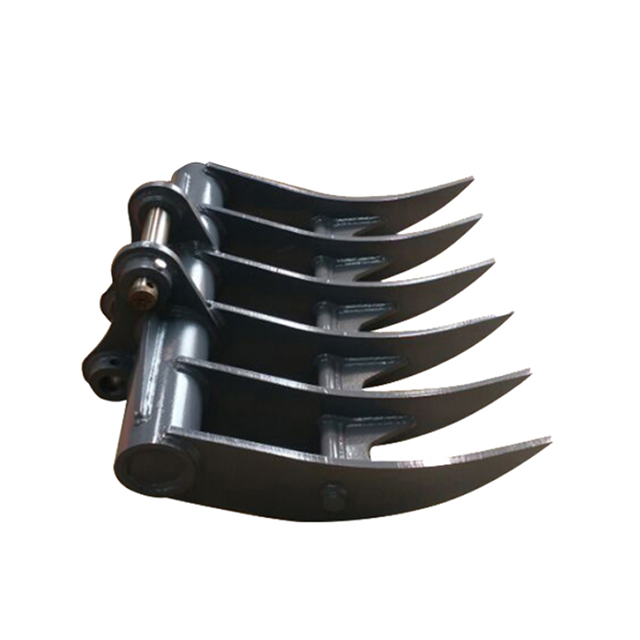
Excavator Skeleton Bucket Definition: A skeleton bucket is an excavator attachment designed for on-site separation of materials. Its core feature is an open, ribbed structure with evenly spaced bars. These bars allow small particles to pass while retaining larger items. This makes it ideal for applications where material sorting is crucial, such as land clearing, demolition, recycling, and quarry operations.
Key Features:
Grid or ribbed structure: Enables efficient separation of fine and coarse materials.
Reinforced steel construction: Provides durability for heavy-duty work.
Customizable bar spacing: Allows operators to tailor sorting size to project needs.
Wear-resistant edges and plates: Extends the bucket's service life under abrasive conditions.
Feature
Benefit
Grid-like structure
Separates fine soil and sand from rocks
Reinforced steel
Handles heavy loads and rocky terrain
Replaceable cutting edges
Reduces downtime and maintenance costs
Custom spacing
Adapts to different materials and applications
Lightweight design
Improves fuel efficiency and excavator performance
How Excavator Skeleton Bucket Works
The sifting action of a skeleton bucket comes from its open grid design. As the excavator scoops up material, smaller particles fall through the openings naturally due to gravity. Operators can enhance this process with gentle shaking or tilting, accelerating the separation of finer materials.
Practical Operation:
Attachment: Fits standard pin-on or quick coupler systems. No special training required.
Digging and loading: Reinforced teeth penetrate soil or rocky surfaces while the ribbed grid filters finer particles.
Screening efficiency: Reduces multiple passes and secondary sorting equipment.
Controlled Shaking:
Accelerates particle separation.
Retains usable larger materials inside the bucket.
Proper operator technique maximizes the bucket's sorting efficiency and extends its service life.
Advantages of an Excavator Skeleton Bucket
Skeleton buckets offer several advantages over standard buckets or rock buckets:
Efficient Material Separation:
Finer materials fall through the ribs while larger debris stays in the bucket.
Reduces the need for extra sorting equipment.
Reduced Load Contamination:
Ensures cleaner loads for transportation, recycling, or backfilling.
Increased Productivity:
Combines excavation and screening in one step.
Reduces fuel and labor costs by minimizing transport and handling.
Durable and Cost-Effective:
Reinforced steel and replaceable wear parts reduce downtime.
Bucket Type
Ideal Use
Main Difference
Standard Digging Bucket
General excavation
Solid walls, no screening
Rock Bucket
Hard rock, quarry work
Heavy, thick steel, no material separation
Skeleton Bucket
Sorting, sifting, land clearing
Grid structure for on-site material separation
Applications Across Industries
Construction and Demolition:
Debris sorting and recycling.
Demolition cleanup.
Site preparation for landscaping or compaction.
Landscaping and Agriculture:
Soil preparation and stone removal.
Land clearing for farming or turf laying.
Compost and organic material sorting.
Mining and Quarrying:
Sorting rocks and gravel.
Reducing transport of unwanted fines.
Compatibility and Size Options
Machine Compatibility:
Mini, midi, and full-size excavators (1–50+ tons).
Fits pin-on mounts and quick couplers.
OEM and aftermarket versions available.
Size Variations:
Width: 300 mm to 2,000 mm.
Capacity: 0.1 m³ to 2.5+ m³.
Weight rating: matched to excavator lifting capacity.
Model
Machine Weight
Width
Volume
Sorting Size
SKB2
0–2 ton
500 mm
60 L
41 mm
SKB4
3–5 ton
600 mm
130 L
41 mm
SKB6
5–8 ton
800 mm
160 L
63 mm
SKB8
5–12 ton
1000 mm
370 L
63 mm
SKB14
12–20 ton
1300 mm
620 L
63 mm
Match bucket size and spacing to excavator capacity and project requirements for optimal performance.
Maintenance and Longevity
Routine Maintenance:
Inspect ribs, side plates, and cutting edges daily.
Grease pins and bushings.
Clean trapped soil or debris.
Repair minor cracks with welding if needed.
Replaceable Parts:
Bolt-on or weld-on cutting edges.
Side cutters and wear plates.
Regular maintenance prevents premature wear and extends operational life.
Safety and Handling Best Practices
Pre-Operation Checks: Inspect structural integrity and ensure secure attachment.
Load Management: Do not overload; maintain balanced loading.
Operator Training: Basic skills suffice, but using shaking techniques improves efficiency.
Leading Brands
Caterpillar (CAT): General duty and heavy-duty skeleton buckets, wide rib spacing, reinforced steel.
Choose reputable brands to ensure quality, durability, and service support.
Conclusion
The YF Bucket Excavator Bucket Skeleton is a versatile and durable attachment that enhances excavation efficiency while performing on-site material sorting. Its grid-like structure separates fine materials from larger debris, reducing the need for secondary equipment and lowering operational costs. Available in various sizes, configurations, and with replaceable wear parts, this Excavator Bucketfrom YF Bucket suits multiple industries, including construction, demolition, landscaping, agriculture, and quarrying. Proper maintenance, safe handling, and selecting compatible models ensure longevity and high productivity.
FAQ
Q: What is an Excavator Skeleton Bucket?
A: An Excavator Bucket with a grid design used to sort and separate materials on-site.
Q: How does an excavator skeleton bucket work?
A: It lets fine soil or sand pass through while keeping larger debris.
Q: Why use a skeleton bucket instead of a standard excavator bucket?
A: It improves efficiency by reducing secondary sorting and equipment needs.