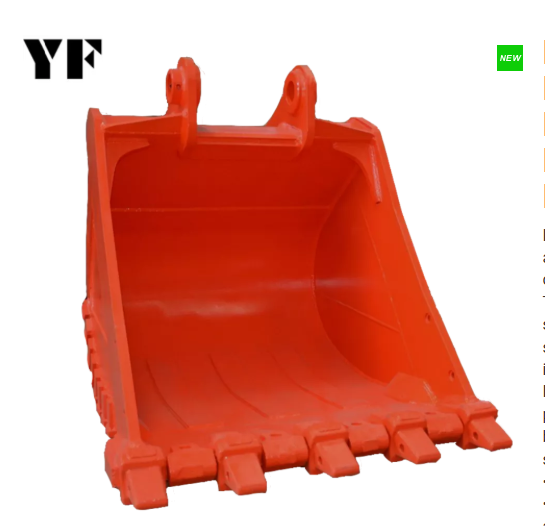
Ever wondered how simple machines transform into powerful jobsite workhorses capable of tackling complex construction challenges? With the right Excavator Attachments and specialized Excavator Buckets, a standard excavator can perform a wide range of tasks, from precise drilling and material handling to heavy-duty demolition and fine grading. In this comprehensive guide, you'll explore the Top 10 most interesting excavator tools and buckets that are reshaping the construction landscape today. You'll also discover how these attachments and buckets enhance project efficiency, improve operator safety, reduce labor demands, and increase versatility, allowing contractors to complete jobs faster, more accurately, and with greater confidence in any environment.
The Top 10 Most Interesting Excavator Attachments in Today's Construction Landscape
Hydraulic Hammers
Hydraulic hammers deliver extreme impact force that transforms a standard excavator into a highly efficient demolition machine. They are capable of breaking concrete slabs, bridge decks, reinforced foundations, and large boulders with ease. Modern models feature advanced vibration reduction systems to protect the boom and hydraulic components, enhancing both safety and longevity. Operators benefit from smoother control and improved accuracy, which is particularly valuable in dense urban environments or confined workspaces where precision is critical.
Why it stands out
Significantly shortens demolition time compared to manual methods.
Reduces operator fatigue during long shifts.
Handles tight urban work zones effectively.
Safer and more consistent than using manual jackhammers.
Augers for Precise Drilling
Augers are essential for drilling uniform holes in a variety of soils, enabling efficient installation of fence posts, poles, footings, and even tree planting. Their spiral design allows precise positioning without causing soil blowout or excessive disturbance. Augers come in various diameters to match project requirements, and high-torque models can penetrate dense clay or compacted ground. Contractors value them for delivering consistent hole sizes, which reduces rework and speeds up construction timelines.
Why it stands out
Strong torque ensures effectiveness in dense or compacted soil.
Produces clean, round holes with minimal disturbance to surrounding ground.
Reduces manual labor and accelerates project completion.
Grapples
Grapples act like oversized mechanical hands, capable of gripping and moving large volumes of materials efficiently. They are widely used in forestry for land clearing, in recycling facilities for sorting metal and concrete, and on construction sites for debris handling. Modern grapple designs provide secure grips while allowing fast loading and unloading, which improves operational productivity. Robust construction ensures they withstand harsh environments, including extreme weather and rugged terrain.
Why it stands out
Secure and reliable grip for irregular materials.
Speeds up material handling tasks significantly.
Durable design enables use in tough, high-impact environments.
Rippers
Rippers are designed to penetrate and break up hard ground efficiently, making them indispensable for frozen soil, clay, and rocky terrains. They are often used as a preliminary step to loosen the earth before excavation or trenching operations. Rippers are engineered for high penetration power while requiring minimal maintenance, which reduces operational downtime and ensures consistent performance over extended projects.
Why it stands out
Low maintenance, durable design suited for tough conditions.
High penetration power improves efficiency in challenging soils.
Excellent for pre-dig operations, preparing sites for other tools or buckets.
Compaction Wheels
Compaction wheels assist in backfilling trenches and compacting soil more efficiently than traditional rollers. Their open-rim design helps to prevent soil from sticking, making them particularly effective on sticky clay or uneven surfaces. By compressing the soil evenly, compaction wheels reduce the number of machine passes required, lowering fuel consumption and machine wear. They are ideal for projects involving pipelines, utility installation, or landscaping work.
Why it stands out
Provides uniform soil compaction, improving structural stability.
Reduces machine passes, saving fuel and time.
Works effectively in pipeline and utility installations.
Tiltrotators
Tiltrotators are among the most innovative excavator attachments available today. They allow buckets or other tools to tilt and rotate 360°, offering unparalleled flexibility in shaping slopes, reaching awkward angles, or performing fine grading without repositioning the machine. This reduces fuel consumption, track wear, and overall operational time. Tiltrotators are particularly valuable in tight construction sites or urban areas where maneuvering space is limited.
Why it stands out
Reduces fuel usage by minimizing machine repositioning.
Provides precise control and versatile tool movement.
Enhances efficiency in confined or challenging work areas.
Extends equipment life by reducing unnecessary track wear.
Pulverizers
Pulverizers crush concrete and other demolition debris into smaller, reusable pieces directly on site. This allows contractors to recycle materials efficiently, reducing the need for hauling and off-site processing. Modern pulverizers provide consistent, smooth output while maintaining powerful crushing force. They are essential for sustainable construction practices and contribute to lower project costs by enabling material reuse.
Why it stands out
Delivers excellent crushing force for large concrete structures.
Produces uniform, reusable debris for on-site recycling.
Supports sustainable construction practices and reduces transport costs.
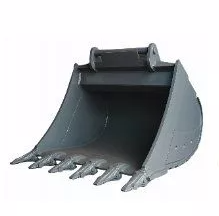
Specialty Excavator Attachments That Push the Limits
Brush Mowers
Brush mowers are designed to handle thick vegetation, including small trees and dense brush, while maintaining stability on slopes and uneven terrain. Their blades are engineered for precision cutting, making them ideal for land clearing, agricultural projects, and roadside maintenance. By maintaining balance even in challenging conditions, brush mowers ensure operator safety and consistent performance.
Stump Grinders
Stump grinders efficiently remove tree stumps using rotating, auger-style cutters. They reduce kickback compared to traditional grinding methods and improve operator safety. These attachments are widely used in landscaping, forestry, and land development projects, where removing stumps quickly is essential for preparing the site for further construction or planting.
Rock Saws
Rock saws are specialized attachments capable of cutting stone, concrete, and asphalt with precision. They produce clean, straight lines, which is critical in civil construction projects where accuracy and aesthetics matter. Rock saws help contractors save time on manual cutting and reduce the risk of material damage.
How These Excavator Attachments Improve Efficiency and ROI
Reduced Labor
Many modern excavator attachments significantly reduce or even eliminate the need for manual labor on construction sites, which not only lowers overall labor costs but also enhances worker safety. Tasks that once required multiple operators, such as moving heavy debris, breaking concrete, or clearing vegetation, can now be performed efficiently by a single machine equipped with the right attachment. This mechanization allows operators to focus on higher-value activities, reduces physical strain and fatigue, and minimizes the risk of on-site injuries, ultimately leading to smoother project execution and fewer delays.
Faster Cycle Times
High-quality, well-engineered attachments are designed to optimize the speed of every task, whether it’s digging, cutting, lifting, or grading. By shortening operational cycles, contractors can complete more work in less time, which directly impacts project timelines and profitability. Reduced downtime between tasks and seamless integration with the excavator enhance machine utilization, enabling teams to tackle multiple jobs efficiently. Faster cycles also improve responsiveness to unexpected site challenges, helping projects stay on schedule and reducing costs associated with prolonged operations.
Lower Fuel Use
Attachments such as tiltrotators, precision grading tools, and hydraulically optimized implements reduce unnecessary movement of the excavator, which directly lowers fuel consumption. Minimizing the need to reposition the machine repeatedly not only conserves energy but also reduces wear and tear on the tracks and hydraulic systems. The resulting cost savings extend beyond fuel, including lower maintenance expenses and reduced environmental impact through decreased emissions. Efficient fuel use, combined with improved operational productivity, contributes to a stronger return on investment (ROI) for contractors, making these attachments a financially and environmentally smart choice.
Comparison Table: Choosing the Right Attachment
| Attachment | Best Use Case | Key Advantage | Difficulty Level |
| Hydraulic Hammer | Demolition | Fast concrete breaking | Medium |
| Auger | Drilling | Clean, accurate holes | Low |
| Grapple | Material handling | Strong grip | Low |
| Ripper | Frozen or rocky ground | High penetration | Low |
| Compaction Wheel | Backfilling | Even compaction | Medium |
| Tiltrotator | Precision grading | Full rotation | High |
| Pulverizer | Recycling | Smooth crushing | Medium |
| Brush Mower | Vegetation clearing | Stable on slopes | Low |
| Stump Grinder | Tree removal | Safe grinding | Medium |
| Rock Saw | Cutting stone | Clean lines | High |
Conclusion
Excavator Buckets and other Excavator Attachments make tough construction jobs faster, safer, and more precise. They enhance operator control, reduce downtime, and open new project possibilities for contractors. Choosing the right Excavator Bucket or attachment boosts productivity across every phase of a project, from demolition and earthmoving to landscaping and material handling.
YF Bucket offers a wide range of durable Excavator Buckets and attachments that support numerous tasks, helping operators work smarter and more efficiently. With YF Bucket, contractors gain reliable tools that improve efficiency, reduce costs, and provide long-term value on every jobsite.
FAQ
Q: What makes these Excavator Attachments the most interesting today?
A: These Excavator Attachments stand out for speed, safety, and innovative excavator attachment ideas that improve job efficiency.
Q: How do I choose the right Excavator Attachments for my project?
A: Match Excavator Attachments to soil, power needs, and tasks to get better control and cleaner results.
Q: Why are tiltrotators so popular in innovative excavator attachment ideas?
A: They tilt and rotate tools, giving operators more precision and smoother movement.


